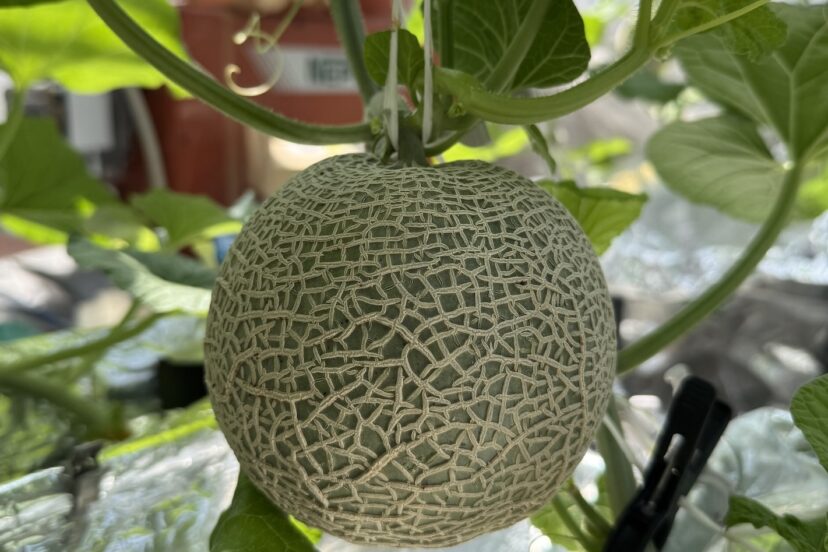
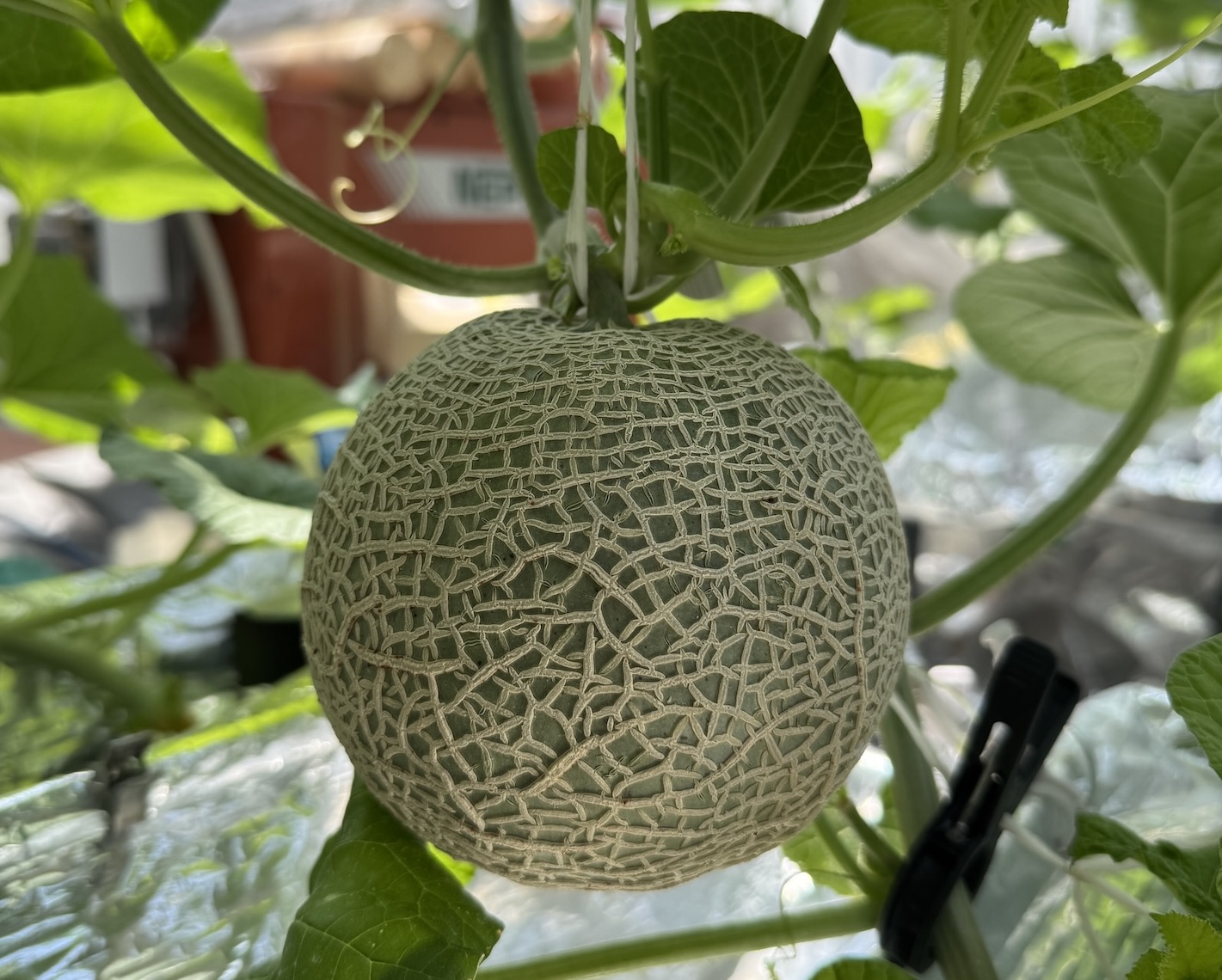
Melons typically ripen rapidly after harvest, resulting in a short shelf life that is one of the causes of food waste and makes long-distance transportation or export difficult.
Amidst this situation, Sanatech Life Science Co., Ltd., in collaboration with the National Agriculture and Food Research Organization (NARO) and the University of Tsukuba, successfully developed a muskmelon variety with superior shelf life and adjustable ripeness. This was achieved by applying the genome editing technology “in planta Particle Bombardment (iPB) method1” to melons and inactivating genes involved in fruit ripening.
This technology is expected to boost domestic consumption and facilitate exports to expanding markets. We plans to proceed with necessary notifications to relevant government agencies and variety registration, aiming for commercial market entry in approximately three years.
Sanatech Life Science Co., Ltd. engages in product development under the corporate philosophy, “For the children of tomorrow and the Earth of tomorrow.” As a global company, we will continue to work sincerely toward the commercialization of genome-edited crops in line with our corporate philosophy.
For more details, please visit NARO’s official website below:
http://www.naro.go.jp/publicity_report/press/index.html
Press Release URL:
https://www.naro.go.jp/publicity_report/press/laboratory/nias/173790.html
Note 1: About the in planta iPB Technology
The in planta Particle Bombardment (iPB) method, jointly developed by NARO and Kaneka Corporation edits the genome of the plant’s growing point (shoot apical meristem) directly. Because it does not require cell culture, it avoids issues such as mutations caused by culture stress and is applicable to varieties that are difficult to culture. Furthermore, as it introduces genome-editing enzymes (protein and RNA) directly, it allows for DNA-free genome editing without incorporating foreign DNA.
For details on the iPB method, please visit the following site:
https://www.naro.go.jp/project/results/5th_laboratory/nias/2021/nias21_s11.html